Patiently
Private Clinic Patient Management System
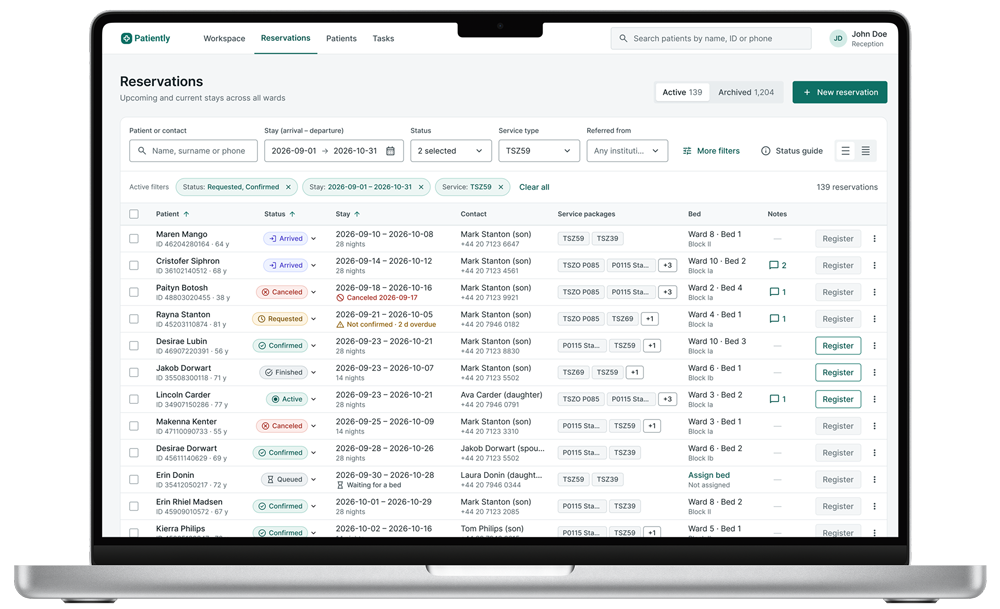
A web-based internal system that unified patient registration, bed allocation, and clinical workflows into one reliable platform.
Project Overview
Client: Private healthcare clinic
Industry: Healthcare
Platform: Internal web application
Timeline: 6-month MVP
Role: Senior UX/UI Designer
Team: Product Manager, Developers, QA
Problem
The clinic managed patient stays across paper notes, Excel files, a third-party registration tool, and a government health system. This created duplicated work, scheduling mistakes, limited visibility across teams, and high administrative effort.
Staff lacked a shared, real-time view of patient stays, bed availability, and treatment-related information. Doctors also had limited support for documenting and tracking care within the clinic workflow.
Users
Primary users: Reception staff, doctors, nurses, head nurse
Secondary users: Managers, clinic director
Each group needed different permissions, data visibility, and actions within a system handling sensitive health information.
Constraints
- Fixed MVP timeline and budget
- Required integration with a government health system as the trusted data source
- High accuracy and safety requirements
- Need to fit existing clinic operations without disrupting critical workflows
Strategic decision: Build vs Buy
A custom scheduling solution would have increased delivery time and cost. Instead, the team adopted a third-party scheduling tool for patient registration and bed/stay management.
My role was to evaluate workflow fit, identify UX limitations, and design a coherent experience around those constraints.
My Role
I led the UX/UI design for the MVP from workflow discovery to implementation support. My responsibilities included:
- Mapping clinic workflows across roles
- Defining user flows, logic, and edge cases
- Designing wireframes and high-fidelity UI
- Structuring role-based information and permissions
- Supporting handoff, development, and QA
Process
I began by understanding how information moved across the clinic and where breakdowns occurred.
Methods used
- Stakeholder interviews
- On-site workflow observation
- Task analysis by user role
- Data and field mapping across systems
This helped define:
- Which data came from the government system
- Which fields were editable or read-only
- Where manual overrides were required
- What information was needed at each stage of a patient stay
To shape the product, I used task analysis, user journeys, user flows, and lightweight service blueprinting. The design focused on error prevention, clarity, and reduced cognitive load in a high-risk environment.
Example: Patient Registration Flow
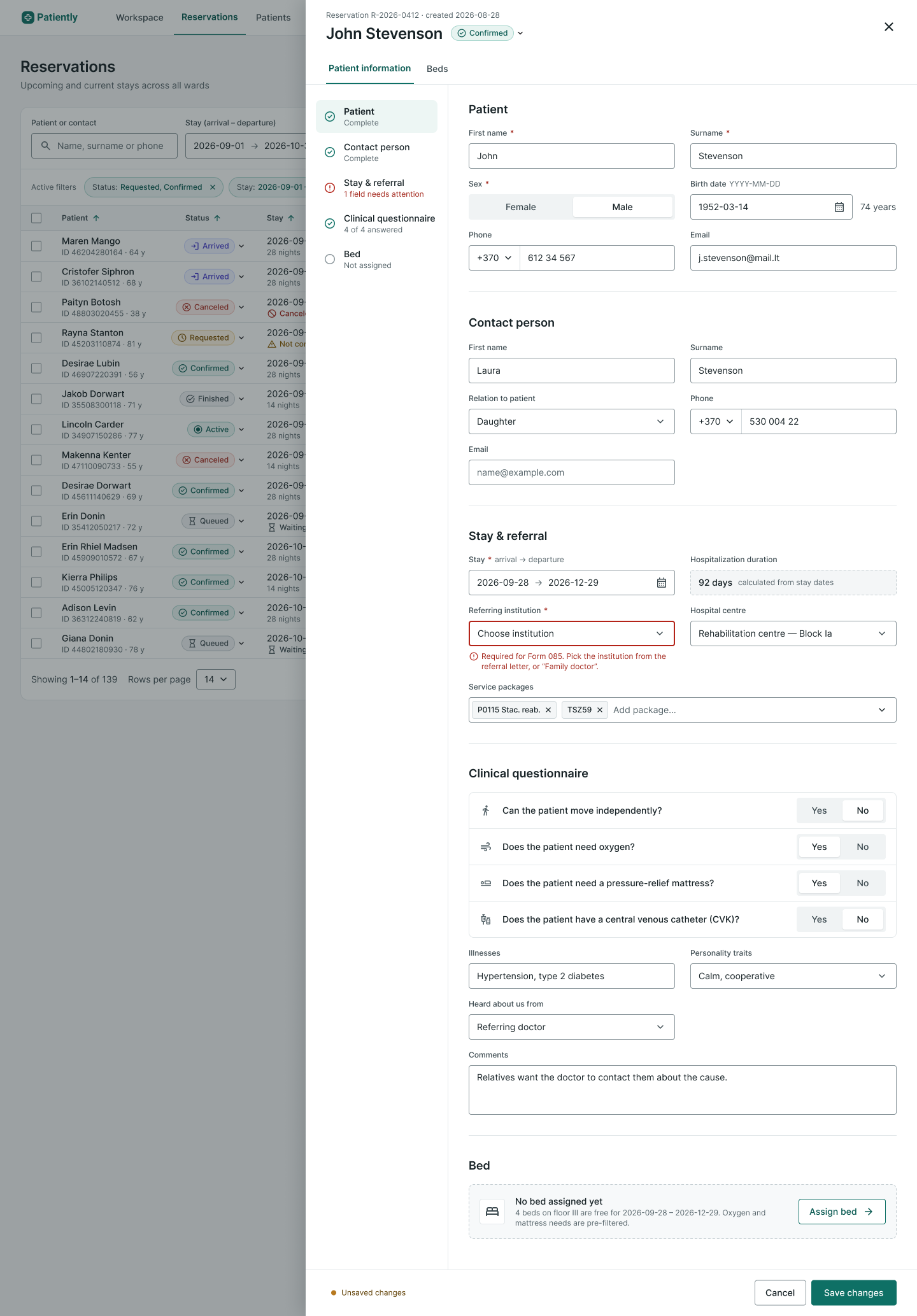
One of the core workflows replaced paper notes and Excel-based coordination with a guided registration process.
The new flow provided:
- A centralized patient profile
- Automatic retrieval of trusted data from the government system
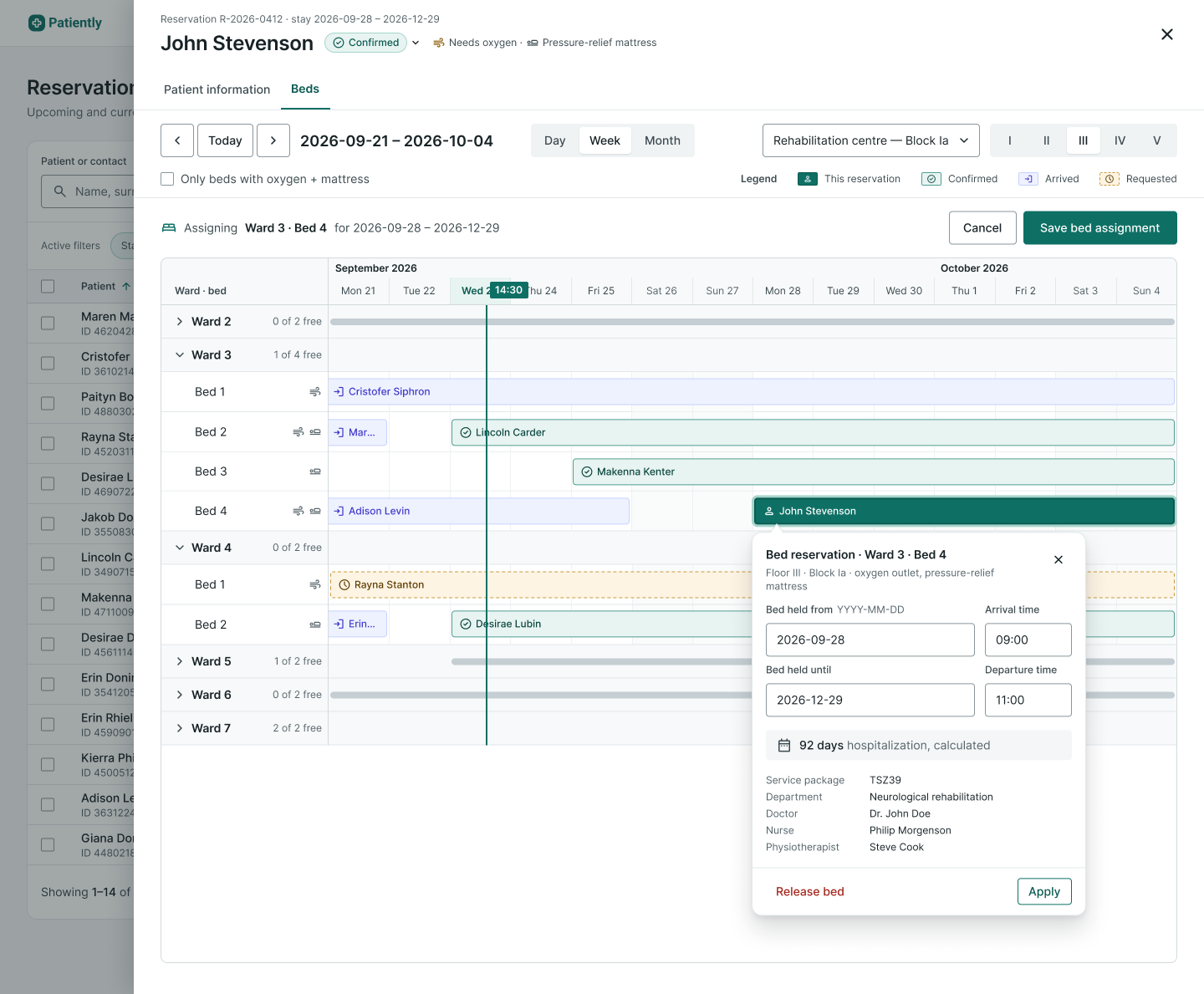
- Bed availability visibility through the scheduler
- Safeguards against duplicate or conflicting bookings
This reduced reliance on fragmented tools and made the registration process more structured and traceable.
UI Design
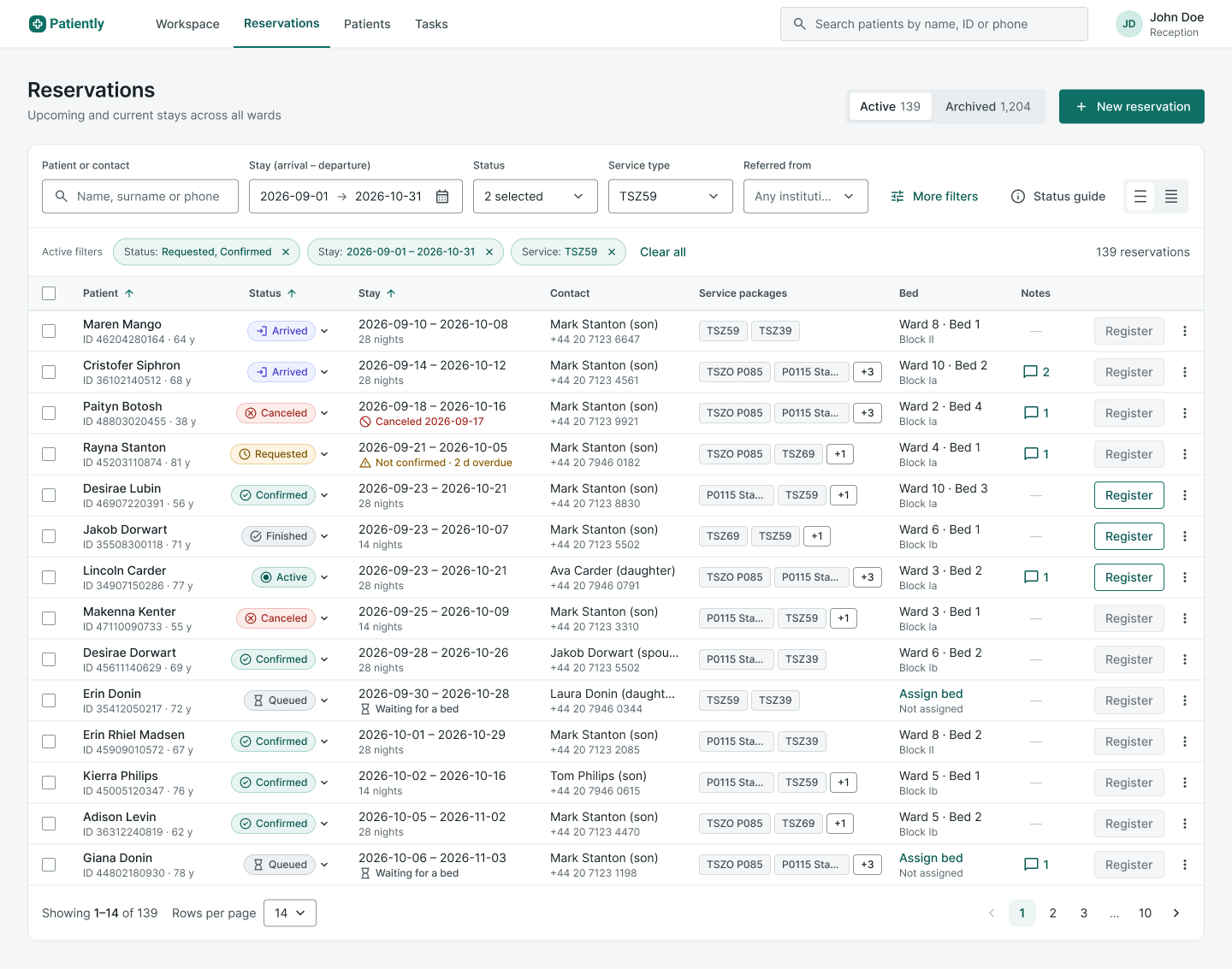
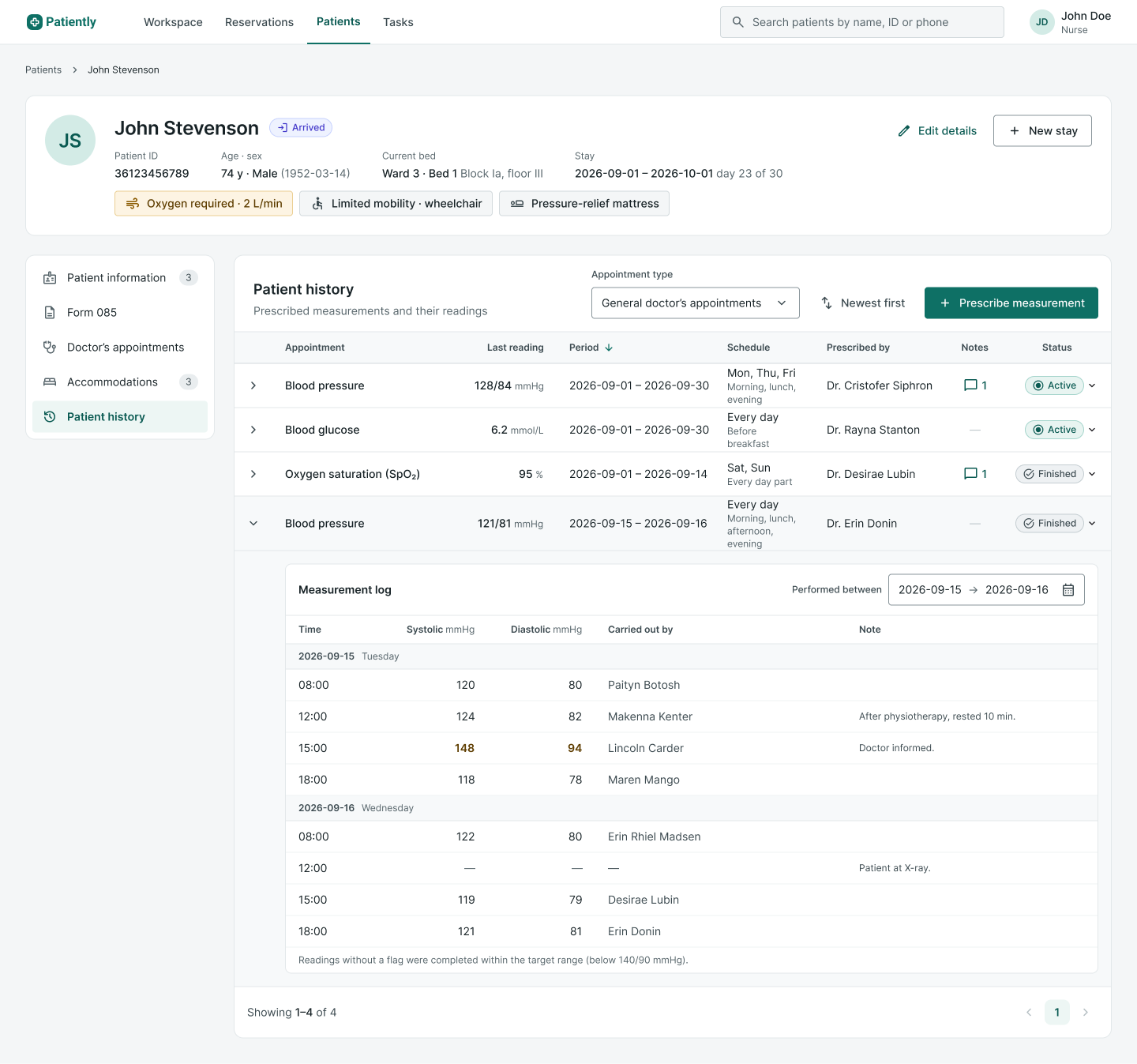
The interface was designed for a fast-paced clinical environment where users are frequently interrupted.
Key design principles:
- Clear visual hierarchy
- Strong contrast and readable layouts
- Explicit statuses, warnings, and validation
- Low visual noise
- Consistent components for faster learning and implementation
A lightweight design system supported consistency across screens and simplified developer handoff.
Collaboration
The project was delivered in Agile sprints with close collaboration between product, development, and clinic stakeholders.
I contributed through:
- Design reviews and sprint planning
- Interactive prototypes and design documentation
- Ongoing implementation support during development and QA
Outcome
The MVP replaced several disconnected tools and introduced a more centralized, reliable workflow for patient intake and stay management.
Key improvements included:
- Faster and more structured patient registration
- Reduced manual coordination and scheduling errors
- Real-time visibility into bed availability
- Better access to patient-stay information for clinical staff
- Lower administrative overhead
Learnings
This project reinforced that in healthcare systems, workflow clarity and error prevention matter more than feature volume. It also showed the value of designing effectively within technical and operational constraints, especially when integrating third-party tools into critical internal processes.