Eacademy
E-Learning Platform for Schools (Grades 5–12)
Designing a scalable learning platform connecting teaching, assessment, and student progress
Project Overview
Industry: EdTech
Platform: Web
Timeline: 6-month MVP, math pilot
Role: Senior UX/UI Designer (led design from discovery to delivery)
Team: Product Owners, Business Analyst, Developers
Problem
Schools used separate tools for teaching, testing and administration. That made it hard to track progress, spot learning gaps and manage access across grades 5–12.
Goal: one platform for students, teachers and administrators that could start with math and scale to other subjects.
Results
Top 5 worldwide at the WSA Young Innovators 2025. Eacademy is the first Lithuanian product to win this category.
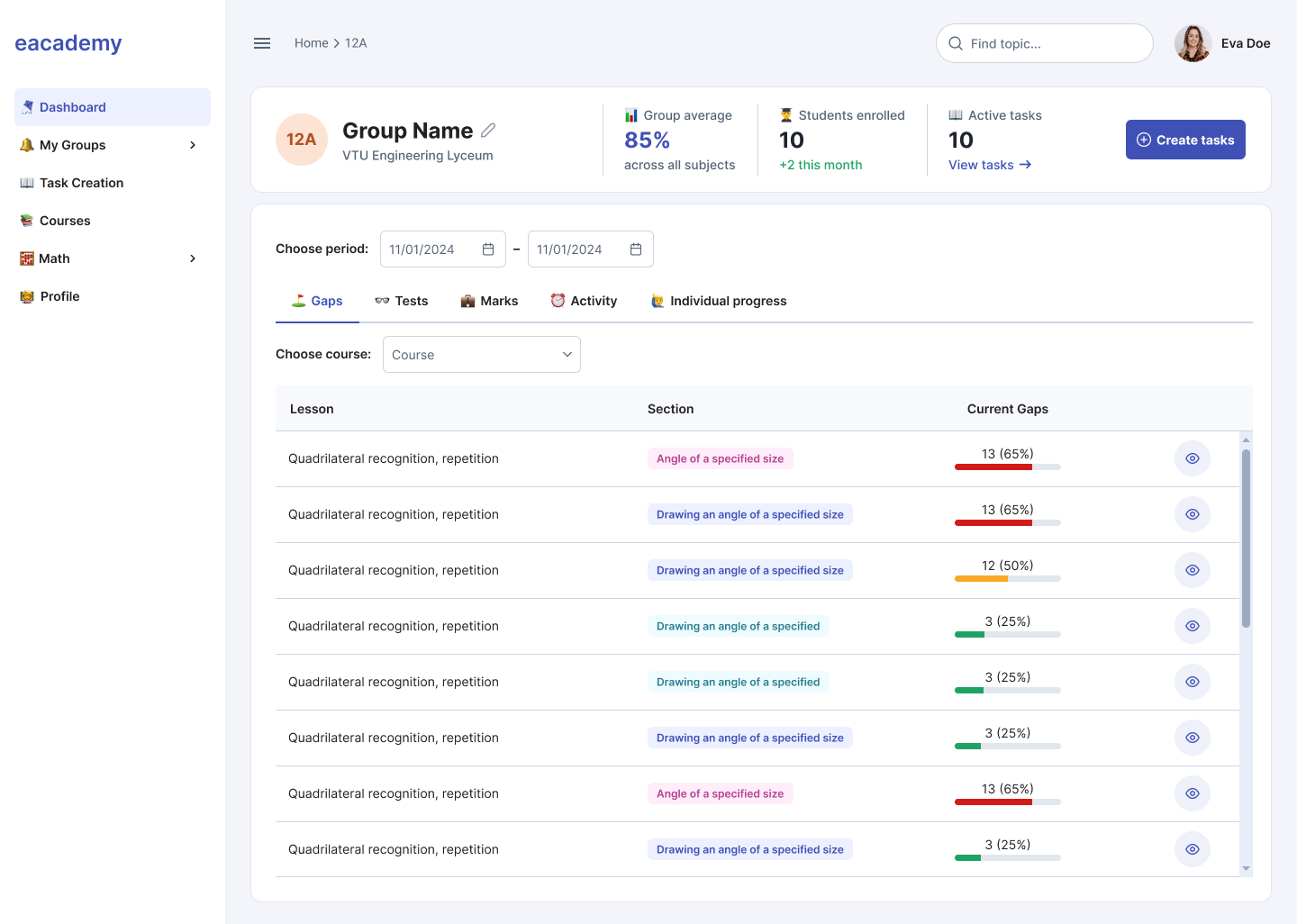
40,000+ students use the platform to find and close gaps in their math knowledge.
200 schools in Lithuania use it, grown from an MVP built with 18 content authors.
Users
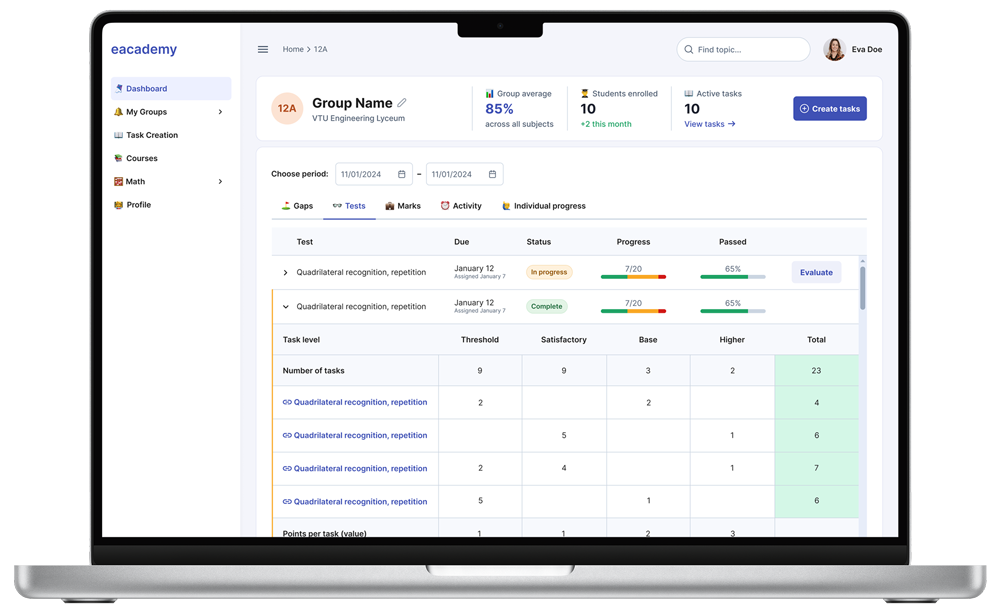
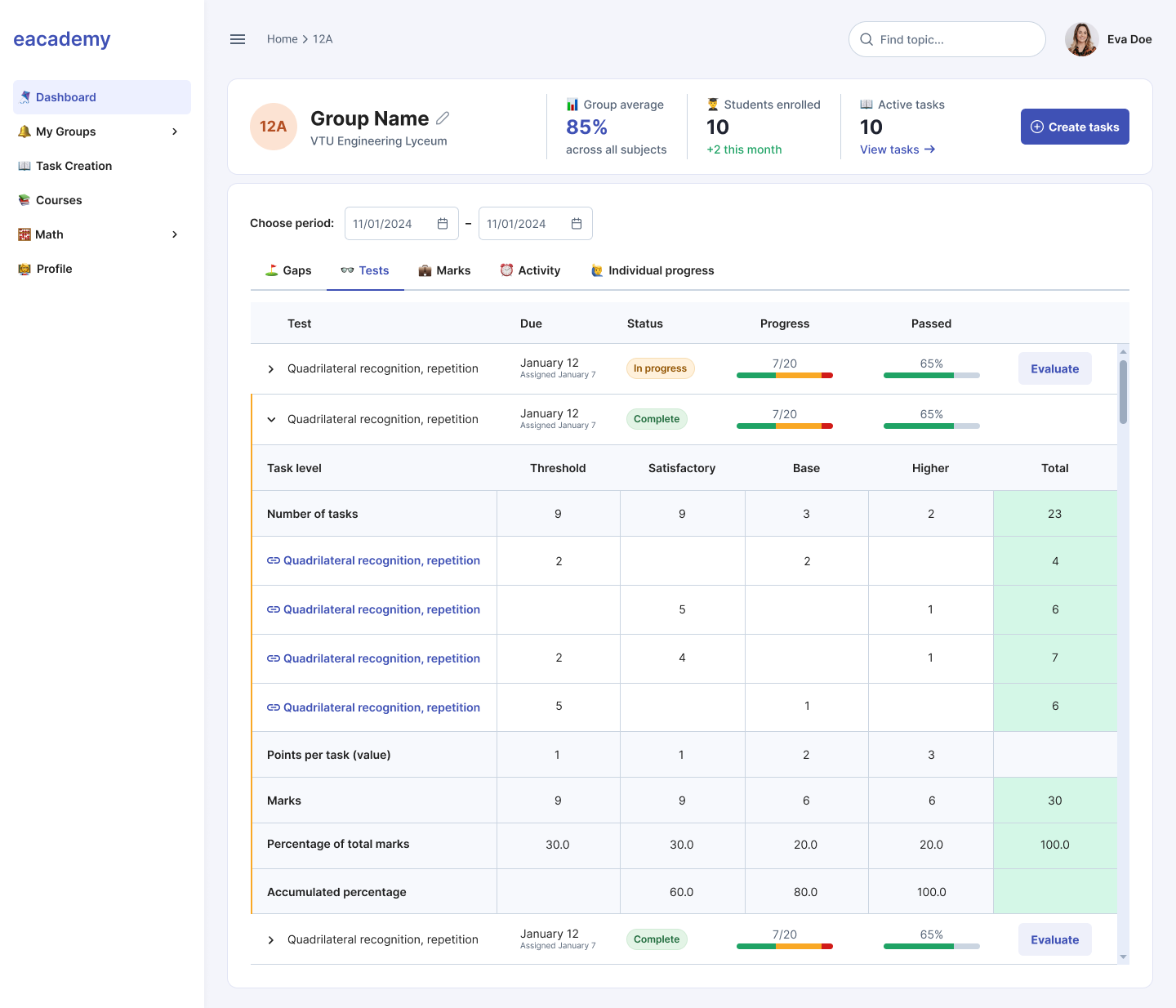
Teachers create assignments and tests, track class performance and manage grading.
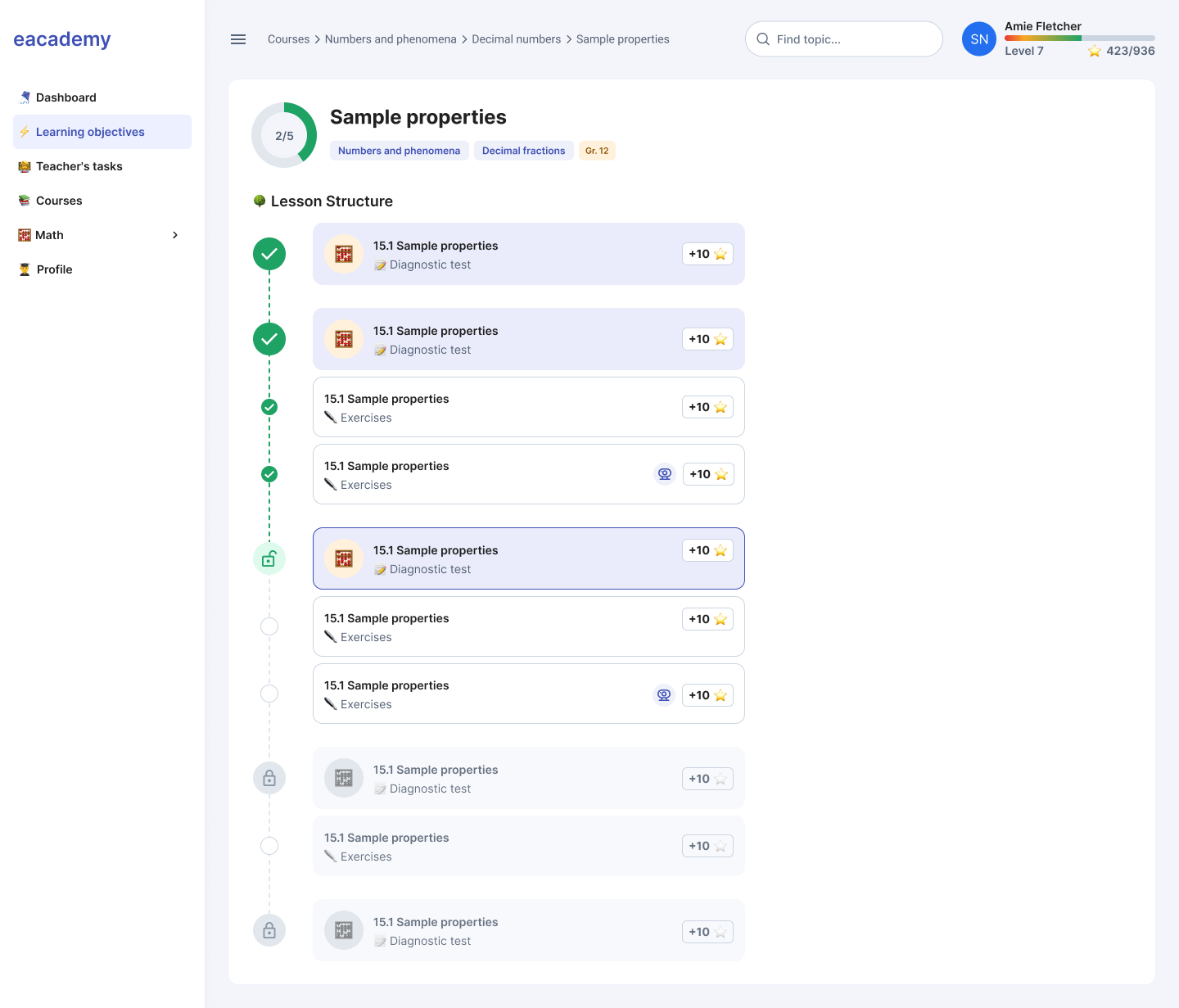
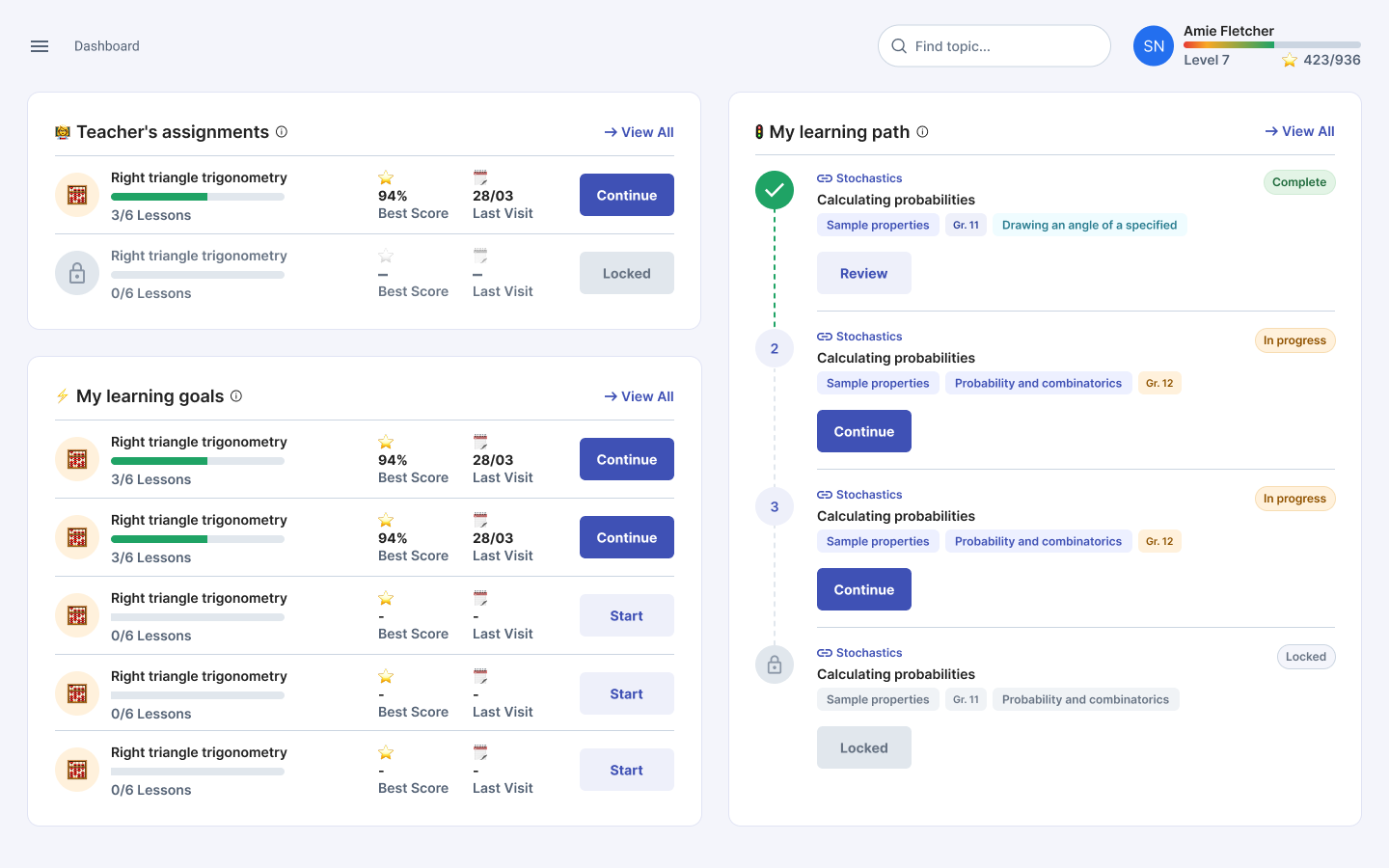
Students follow learning paths, track deadlines and see their strengths and gaps.
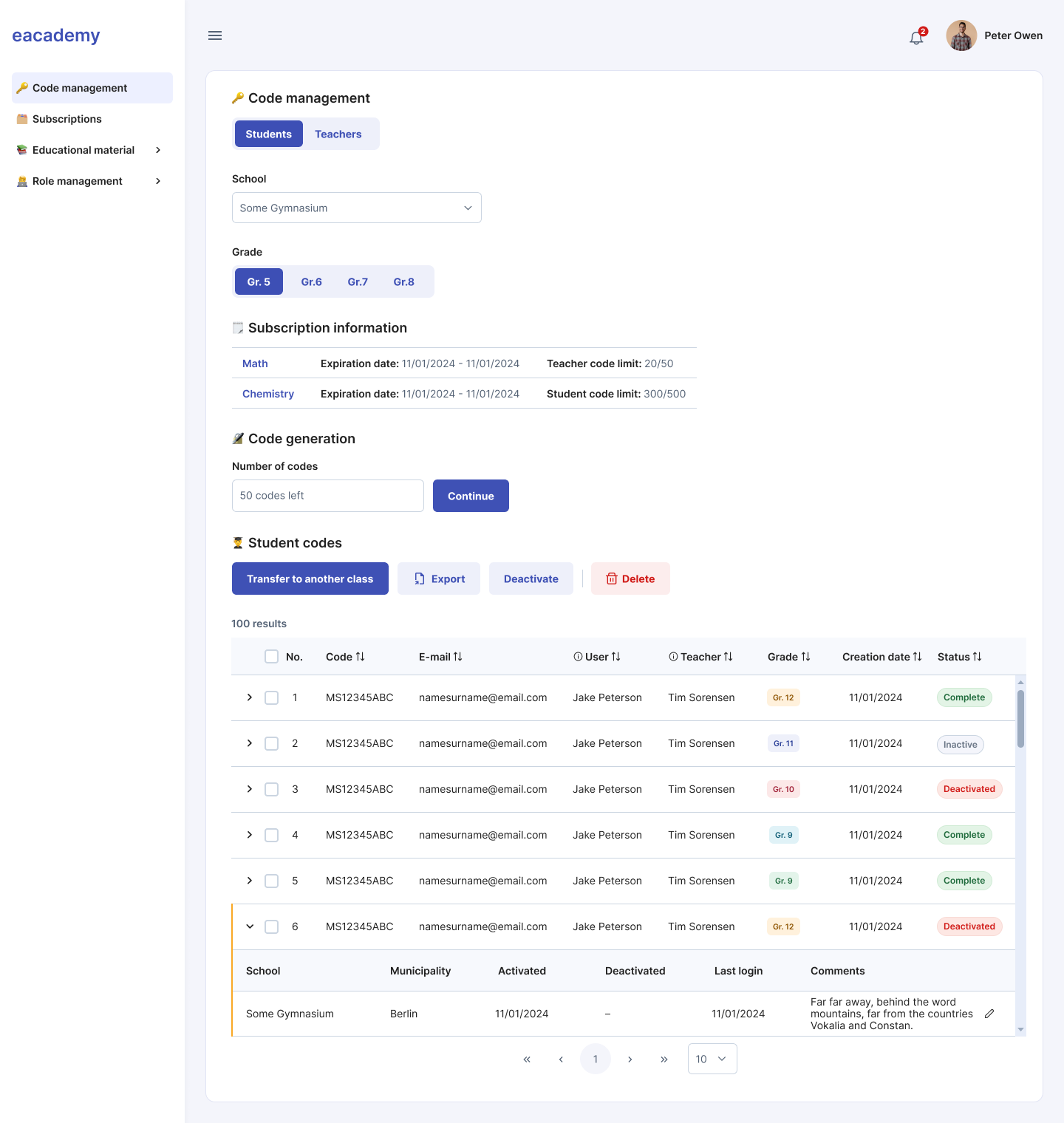
Administrators manage subscriptions, onboarding and access.
Each role had different needs, permissions and complexity, so the product had to be built around roles from the start.
Key decision: integrate assessment instead of building it
To launch fast, the team used an external assessment platform rather than building a testing tool. This saved development time and let us focus on learning flows and analytics.
My job was to make the integration feel like one product:
- Smooth transitions between our platform and the assessment tool
- Consistent interaction patterns across both
- Less switching between contexts for teachers
My Role
- Set the UX direction and product principles
- Structured the information architecture for a multi-role platform
- Led research and validated workflows with users
- Designed wireframes, prototypes and the final UI
- Built the design system on PrimeReact
- Aligned business, product and technical constraints
Research & Discovery
I worked directly with teachers, administrators and stakeholders through:
- Teacher interviews on assessment habits and the data they needed
- Stakeholder sessions on onboarding, subscriptions and requirements
- Workshops and requirement mapping
- Student requirements set by teachers and schools
These findings shaped the navigation, dashboard structure, progress visibility and role-based flows.
UX Strategy
Three roles with different goals needed a clear structure that didn’t feel heavy. I designed:
- Dashboards specific to each role
- Modular navigation
- Information architecture based on permissions
- Separate flows for teaching, learning and administration
Principles
- Reduce mental load for teachers managing many classes
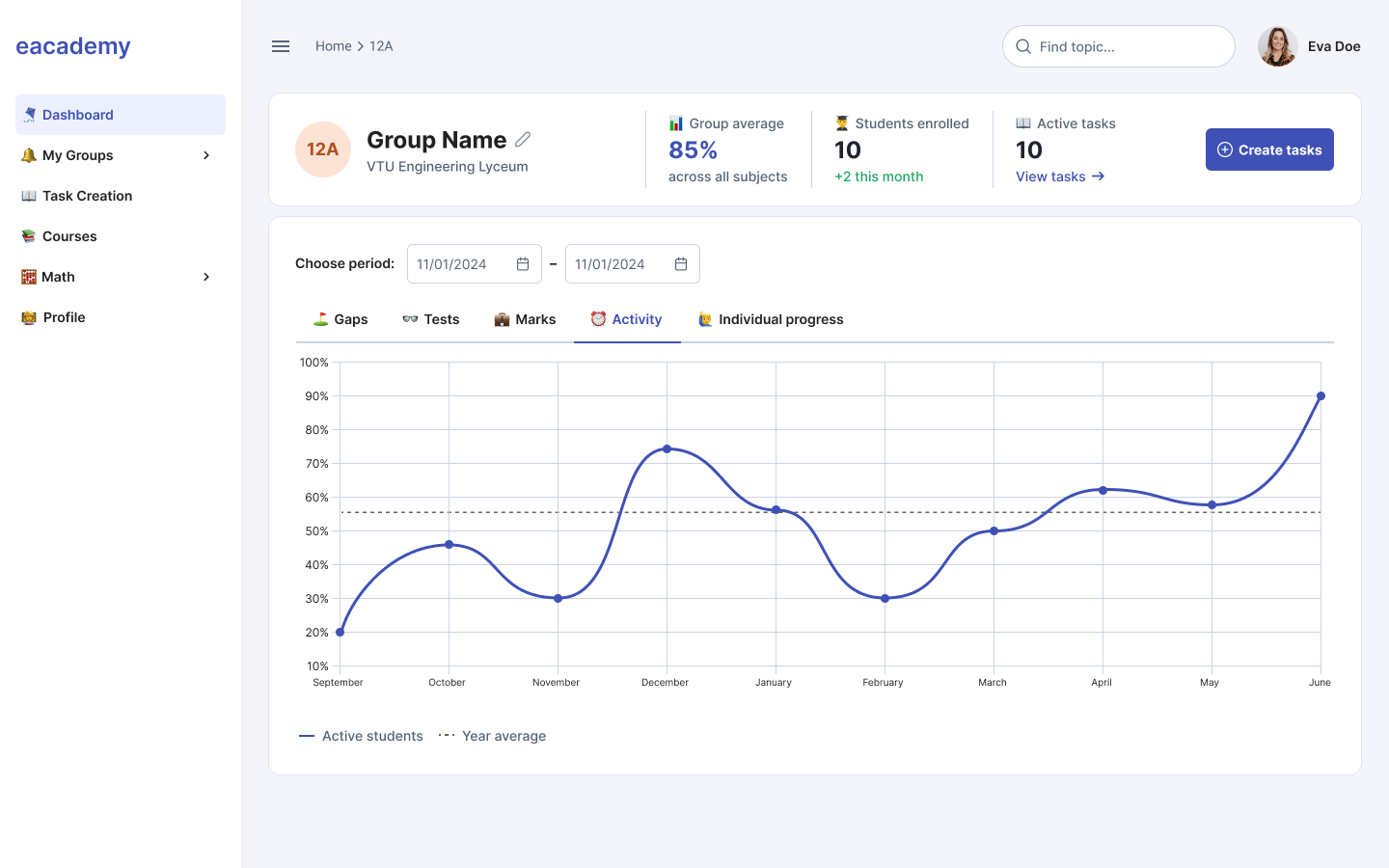
- Make progress and deadlines visible at a glance
- Stay consistent across integrated tools
- Allow growth without a redesign
UI Design & Design System
I built the UI on PrimeReact to move fast and scale. The result:
- Consistent, reusable components
- Clear hierarchy on screens with a lot of data
- Faster handoff to developers
- A ready foundation for new subjects and features
Impact
- The MVP launched in 6 months and grew to national adoption and global recognition.
- Personalized content and clear progress tracking increased student engagement.
- Teachers got one workspace instead of fragmented tools.
- The role-based structure and design system made it possible to expand beyond math without starting over.
Collaboration
The project was delivered in Agile sprints with close collaboration across product, analysis, and engineering.
I contributed through:
- design workshops and feedback sessions
- prototypes for validation and demos
- documentation and implementation support during development
Outcome
The MVP created a more unified digital learning experience by connecting teaching, assessment, and progress tracking in one platform.
Key improvements included:
- better visibility into student progress and deadlines
- clearer performance insights for teachers
- reduced friction in onboarding and access management
- a scalable design foundation for future expansion
More broadly, the platform moved the institution toward a more structured and data-informed learning environment.
Learnings
This project reinforced the importance of role-based UX, integration design, and scalable systems thinking in educational products. It also showed that aligning with existing workflows and tools can improve both delivery speed and product adoption.